Masterplan Verdamping
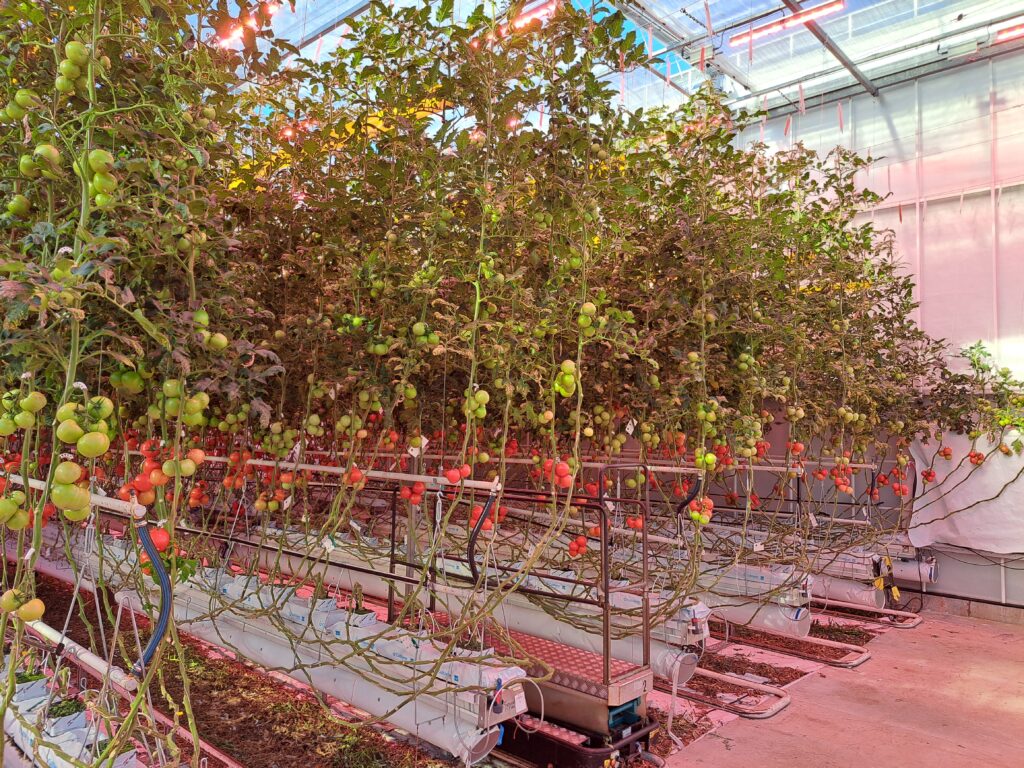
The project “Masterplan Verdamping” aims to reduce energy consumption in greenhouse horticulture by developing knowledge about the required evaporation of a crop and safe ways to control evaporation. For fossil-free greenhouse horticulture, it is important to reduce the consumption of a greenhouse as much as possible. The evaporation of water-permeable plants costs a lot of energy and is an important factor in the energy consumption of a greenhouse. But with low evaporation, less nutrient transport may also take place, which can affect the growth and development of crops.
Energy-efficient cultivation methods with LED lighting, insulation, limitation of heat input and ventilation generally have an inhibiting effect on crop evaporation. That this problem with quality and growth can lead to became apparent in the winter of 2022-2023, when growers saved a lot on energy due to high energy prices. Through research in this project, we want to gain more insight into the consequences of growing with low evaporation, and discover how we can reduce negative consequences for cultivation. At the Delphy Improvement Centre we focused on tomatoes.
The project runs from 2024 to 2026. A total of 3 greenhouse tests are being carried out at Delphy. In these tests, crop evaporation is determined by means of the water balance. The first test compared how much crop evaporation is caused when production takes place at a high humidity level in the air and/or a high EC dose. In the second test, the effect of the amount of air circulation on crop evaporation was tested under certain conditions.
In the Masterplan Evaporation, the business unit Greenhouse Horticulture of Wageningen University & Research, Delphy Improvement Centre, Plant Lighting and Glastuinbouw Nederland are working together, with funding from the Top Sector Horticulture and Starting Materials and Stichting KIJK.
The project round: 2024 to 2026.
This project receives financial support from the Top Sector Horticulture & Starting Materials and Stichting KIJK. Within the Top Sector, businesses, knowledge institutions and the government work together on innovations in the field of sustainable production of healthy and safe food and the development of a healthy, green living environment.